
👨🔬 Governance Lab #121
Lab Report #121 - Aave’s Ownership Mandate, Gnosis' Hard Fork Debate, Curve’s 2026 Swiss Stake Funding Request, and more
Welcome back to the Governance Lab, your weekly source for all things StableLab, DeFi, and DAO Governance.
At a Glance 👀
🔵 Aave DAO weighs an ARFC that would move “Aave” brand assets, domains, and comms channels into a DAO-controlled vehicle
🟠 Gnosis DAO debates a proposed hard fork in the aftermath of a Balancer-related hack
🟣 Curve DAO reviews Swiss Stake AG’s 2026 funding request for 17.45M CRV
🧪 From the Lab: Building Forse: The data stack behind our terminals & Welcome to the Team: Stan
Let’s dive in 🏊
Aave DAO
Aave DAO considers mandate to transfer brand assets from Avara to the DAO
BGD Labs has posted an ARFC arguing that AAVE tokenholders should explicitly control Aave’s “soft” assets—brand, naming rights, and key gateways—rather than relying on informal alignment between contributors and the DAO. The post frames ownership of these assets as a core governance concern because they shape how users find, trust, and interact with Aave. According to the forum post, this Phase 1 discussion is meant to establish the mandate first, with implementation details to follow.
The proposal asks whether the DAO should “regain full control” over Aave’s brand and associated assets, including naming approvals (e.g., “Aave Labs”, “Aave App”), official communication channels that use the Aave name, and domains such as aave.com and onaave.com. It also points to online organizations and distribution surfaces like GitHub and npm as assets that should be DAO-owned rather than controlled by any private party. The author notes there is no executable payload in this phase and suggests a single Snapshot or on-chain vote with an empty payload could be sufficient to signal intent.
If advanced, the key question becomes what structure can hold and administer these assets with clear accountability to tokenholders and safeguards against capture. The post suggests implementation should be run by a neutral party independent from Aave service providers, with legal advice pursued if current counterparties do not facilitate transfers. Readers can watch for how the thread defines the DAO-controlled vehicle, what guardrails are proposed around access and control, and when this moves from discussion into a formal vote.
Gnosis DAO
Gnosis governance discusses proposed hard fork after hack
A thread on the Gnosis forum proposes exploring a hard fork in response to a Balancer-related hack, kicking off discussion on what remediation should look like and who it should protect. The conversation sits at the boundary between protocol incident response and ecosystem-level decision-making, where options can range from standard fixes to more invasive interventions. The topic is currently being debated in the open rather than presented as an immediately executable governance action.
Hard forks, if pursued, require coordination across validators, node operators, and core infrastructure, and they typically ripple into exchanges, bridges, and indexers. In incident settings, the hard questions are usually about scope—what specifically changes, what does not, and how to avoid unintended damage to unrelated users and contracts. The framing in this thread indicates the community is still evaluating options rather than executing a finalized remediation plan.
What to watch next is whether the discussion converges on criteria for intervention, including the minimal scope required to address the incident and the operational plan to coordinate an upgrade safely. Even if a fork does not move forward, the thread can still crystallize next steps around security process changes, incident communications, and protocol-level mitigations. Any escalation from forum debate to action will likely depend on the feasibility of coordination and the level of community support for setting this precedent.
Curve DAO
Curve DAO reviews 2026 funding proposal for Swiss Stake AG
Swiss Stake AG has posted an amended 2026 grant proposal after indicating the original request did not have sufficient support following community feedback and an initial vote outcome. The amendment is positioned as a way to increase clarity, accountability, and budget discipline while maintaining continuity of service for Curve’s development roadmap. The proposal continues to cover core development, infrastructure, and operational support, with the authors framing Swiss Stake as a long-running contributor to Curve’s repositories and technical work.
The key change is a two-phase funding mechanism that splits the originally requested 17,450,000 CRV into sequential votes, with Phase 1 funding set at 8,725,000 CRV to cover six months of operations. The second phase is intended to be contingent on a structured review of Swiss Stake’s organizational setup, cost structure, and operational processes, with a report to the DAO promised by the end of March 2026 at the latest. The amendment also outlines a cost review process across payroll, infrastructure, audits, and external providers, alongside near-term measures such as a hiring freeze, no new cost elements or merit-based increases, and minimizing conference travel.
If approved, the amended structure would shift Curve’s 2026 Swiss Stake funding from a single annual grant into a mid-year checkpoint that forces a re-justification of spend after the review and any resulting organizational changes. The governance tradeoff becomes whether this phased approach is sufficient to address concerns around transparency and scope without creating delivery risk from short funding horizons. Readers can watch for how Phase 1 is implemented, what the March 2026 report recommends, and what terms accompany any follow-on vote for the remainder of 2026.
Links
🚀 Launches, Deployments, Partnerships, and M&A
Introducing the Ownership Token Index
📑 Reads, Insights, and Reports
🔒 Security, Risk, & Hacks
🧗 Milestones & Updates
Safe DAO - 2025 Reflections and 2026 Outlook
Scroll DAO Event Recap Governance Day 2025
Sky Ecosystem - Annual State of Sky Ecosystem | 2025
Uniswap DAO - Unification Onchain Proposal Scheduled
🗞️ Everything Else
Arbitrum DAO - RAD Program Manager & Scope of Work
Arbitrum DAO - Discussion on Contributor Incentives
Euler DAO - Adopt The SEAL Safe Harbor Agreement
Lazy Summer DAO - Delegate Responsibilities & Next Steps for Compensation Framework
Starknet Foundation posts Q4 Snapshot Polls
Uniswap DAO - Delegate Dashboard by CuriaLab
Proposal Tracker™️
⛓️ VOTING UNDERWAY | Lido DAO - Activate Lido V3: Phase 1 (Soft Launch)
Summary: This onchain vote would activate Lido V3 in a constrained “soft launch” mode, introducing non-custodial, over-collateralized staking vaults (stVaults) that let stakers opt into specific operators or strategies while still minting stETH. The execution bundle includes Dual Governance-timed upgrade steps (locking a monitored window, upgrading proxy implementations, reassigning roles/permissions, and configuring oracle-related parameters), pauses Predeposit Guarantee guided deposit flows for the soft launch, and adds Easy Track factories so the stVault Committee can configure VaultHub and OperatorGrid.
From the Lab
Building Forse: The data stack behind our terminals
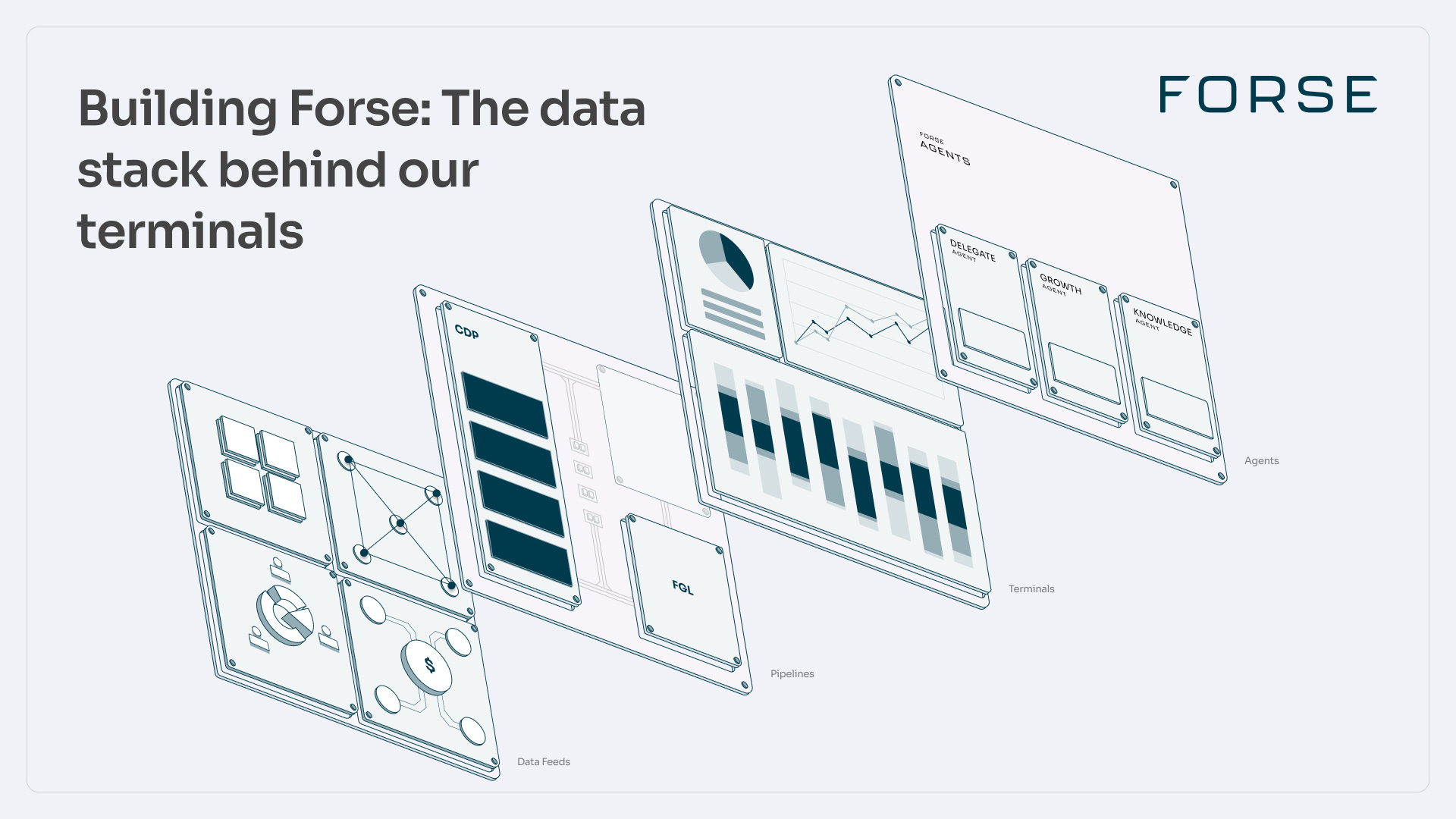
Teams want growth visibility they can act on, without rebuilding data plumbing every time a new chain, feed, or surface shows up. Forse Terminals are built to make that repeatable. In this post, Johannes, Head of Engineering, breaks down the data stack behind our Forse Terminals: CDP (Customizable Data Pipelines) for turning messy sources into clean, reusable tables, and FGL (Forse Graphic Layer) for mapping those tables into configurable charts without hard-coding visuals into the app. Together, they help us ship 10x faster live, trustworthy growth terminals and lay the foundation for agent-first workflows built on consistent, auditable data.
Welcome to the Team: Stilyan Mitrev
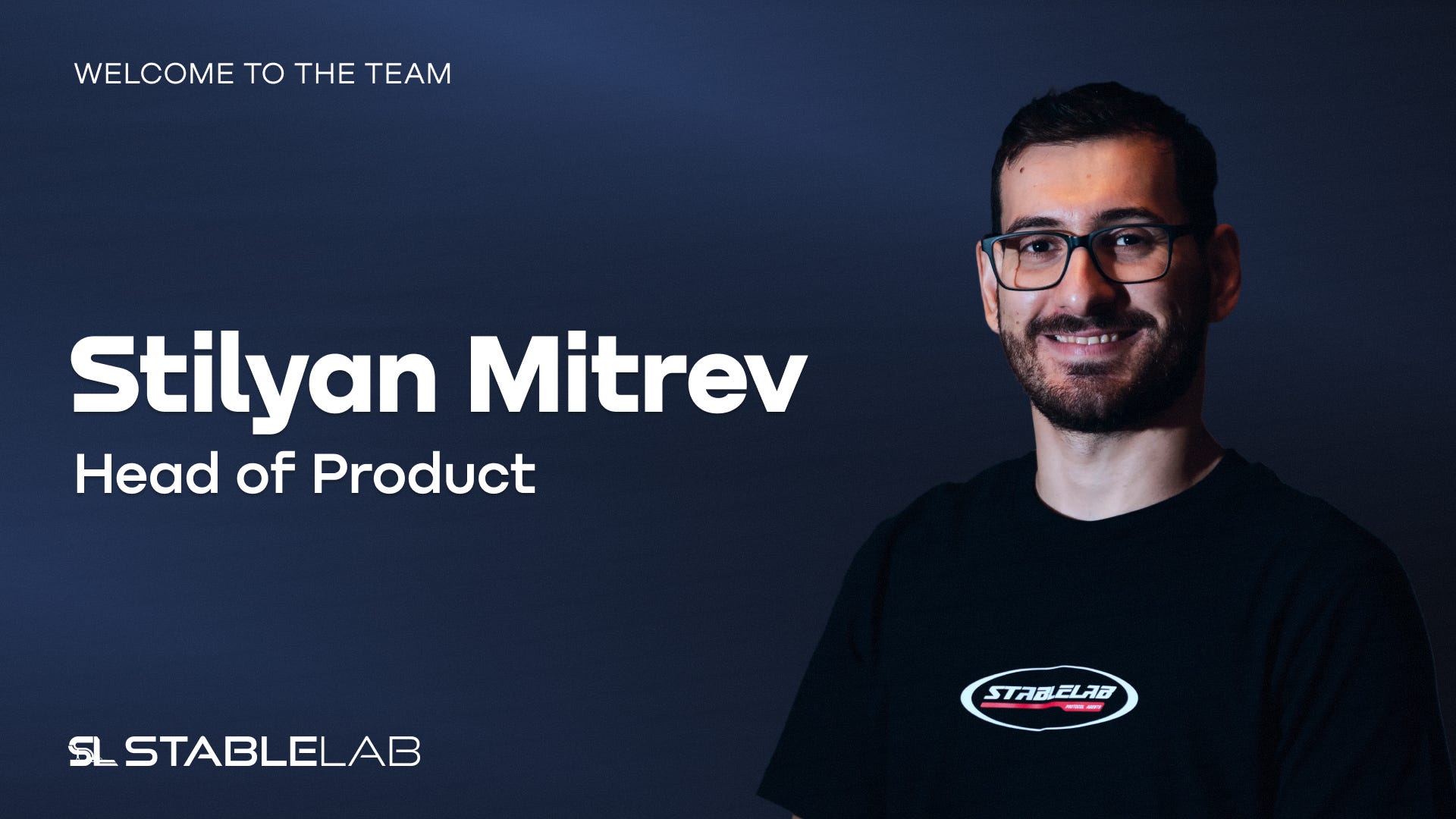
We’re excited to welcome Stilyan Mitrev to StableLab as our new Head of Product. In this post, Stan shares how he found web3 through NFTs and DAOs, what he has built across 0-to-1 crypto products, and the product principles he brings to Forse: meet users where they are, build for existing workflows, and prioritize fundamentals that drive adoption. He also shares why he joined now and what he is focused on as we build products that help onchain organizations scale.
Our Voting
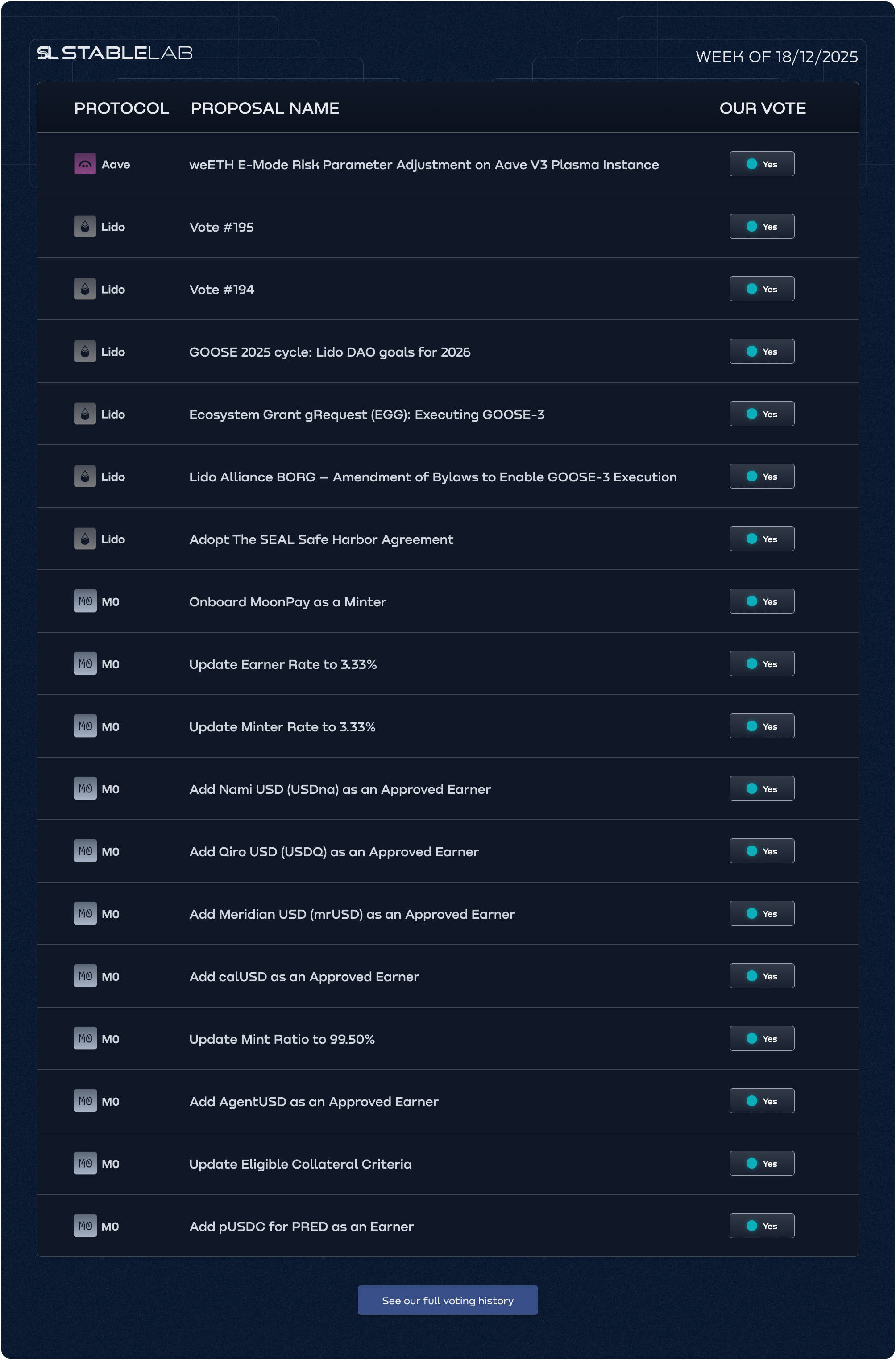
📆 December 12th → December 18th | 🗳️ Total Votes: 18
See our full vote history and detailed rationale HERE.
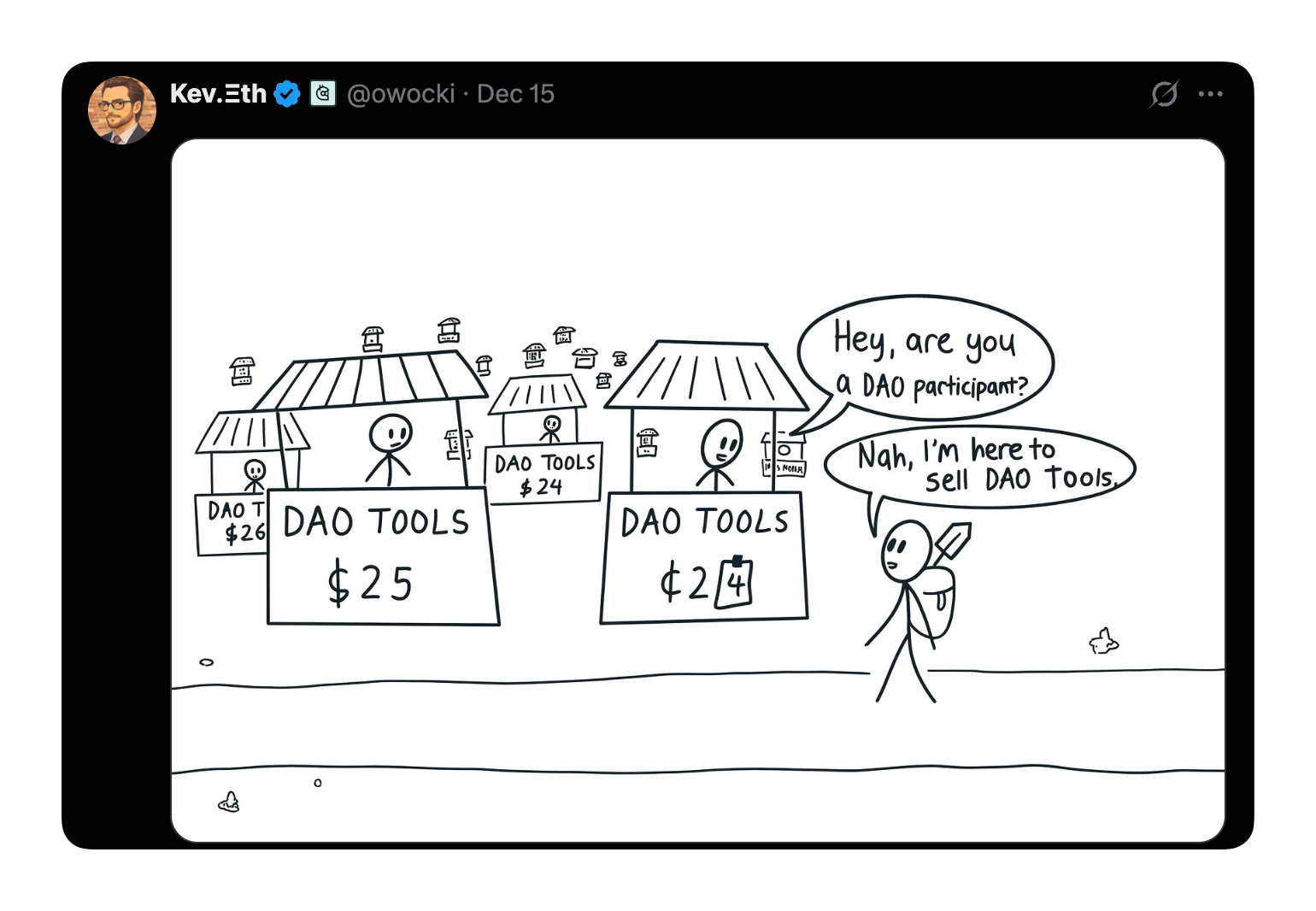
Meme

Forse: The Intelligence Layer Fueling Web3 Growth
💌 FOLLOW US
Website | Twitter | YouTube | LinkedIn
🤝 DELEGATE TO US @ stablelab.eth
Tally | Boardroom | Linktree